Archive for the ‘Generalities & Rants’ Category

Old New England

Tuesday, April 16th, 2013

As mentioned in my last post, we visited New England last month and spent a few days in Rhode Island. Looked at the famous mansions of Newport, poked around Providence, admired the ocean cliffs, etc.

But you know what I find myself thinking about? The Newport Creamery.

We ate there twice. We also ate at several other restaurants — the trendy TSK, Belle’s Cafe, Scampi up in Portsmouth, and so on — but it’s the Newport Creamery I remember.

You know why? Nostalgia.

I grew up in New England — in Massachusetts, in Billerica and Bedford. Naturally, like any kid, I thought that what I grew up with was normal; it wasn’t until I moved away that I began to realize what was standard American, and what was specifically New Englander fare. It took even longer before I began to miss the New England stuff.

And some of it I still didn’t necessarily realize was New England specific; I thought it was just old-fashioned.

But eating at the Newport Creamery brought back a lot of memories, and a realization that some of that stuff is unique to New England.

When I was a kid, we used to eat at Friendly Ice Cream sometimes. That’s the chain that later became Friendly’s, but in my youth it was Friendly Ice Cream, no apostrophe S, and it was still pretty local — they didn’t get outside New England at all, and were mostly just in Massachusetts. For 95 cents you could get a cheeseburger and a frappe — that’s the New England name for what most of the country calls a milk shake; it’s one syllable, “frap,” not the same as the whipped-fruit thing called a “frappé.” And the cheeseburger would be on butter-grilled toast, not a bun.

But then the chain started expanding, they changed the name to “Friendly’s” and updated the menu, and the burgers were on buns…

Getting sandwiches on butter-grilled toast — that wasn’t just Friendly. There were a lot of places that did that when I was a kid.

Turns out there still are — in New England. It’s not so much old-fashioned as regional.

And the Newport Creamery of today has almost exactly the same menu that Friendly had fifty years ago. Not at the same prices, of course, but wow, everything tasted just the way I remembered the food at Friendly.

So for the past month I’ve been thinking about that food, and wishing there was some way to get it here in Maryland.

A Certain Age

Tuesday, January 22nd, 2013

I’m fifty-eight. This is an age when a lot of my contemporaries are worrying about caring for their elderly parents or other relatives. Many of them, understandably, post about their concerns in various online venues I frequent.

Which makes me feel a bit odd. The last of my ancestors died more than twenty years ago. I have exactly four living blood relatives older than I am, so far as I know — two siblings, and two first cousins once removed. (There may be some other distant cousins, but none of them live in the U.S. and I lost track of all of them long ago. One of the living first cousins once removed lives in England, come to that.) My parents and grandparents and aunts and uncles are all long gone.

My wife’s parents and grandparents are all gone, too, though she still has some aunts and uncles.

While I can see that caring for aging parents must be stressful, it’s a problem I sort of wish I had. But only sort of. I miss my parents very much, but I’m relieved I’ll never need to worry about them.

So every time I see some article talking about how sooner or later we all go from being cared for by them to being caretakers for our parents, I have a rush of mixed emotions as I say, “Not all of us, damn you.”

Writers’ Folly

Thursday, December 6th, 2012

There’s something beginning writers do — especially, but by no means only, self-published ones — that I don’t understand.  Beginning writers do a lot of stupid and counter-productive things, of course, but I have in mind one particular one that I find baffling.

Or maybe, now that I think about it, not all that baffling. Consider: There you are, Joe Author, and your new book Carbuncles of Mars is now available on Amazon, and you are simultaneously swollen with pride at your accomplishment, and terrified that nobody will buy it or review it or read it or acknowledge your existence in any way. You want to prove that you’re a Real Writer, and you want to sell your book.

So you join writers’ groups wherever you can find them, to prove you’re a real writer — I get that. But what I don’t get is then posting ads in them, rather than talking about, you know, writing.

I suppose it comes from forgetting that proving you’re a real writer, and selling your book, aren’t the same thing.

But you know what happens when you post ads to writers’ groups? The real writers leave. Because we aren’t looking for more stuff to read; we always have more than we can possibly keep up with. We want places where we can talk about writing, but we won’t wade through ads to do it.

I just saw this happen over on Facebook, where C.J. Cherryh left a writers’ group because it was overrun with ads. She took the trouble to say she was leaving, and why; I suspect that most of the name writers there didn’t bother, they just vanished. I’m not 100% sure why I haven’t left that particular group yet; I’ve certainly dropped out of plenty of others over the years when the ads from beginners overwhelmed the discussion.

And that’s the thing — this always happens. Every. Single. Time. Any time anyone creates a writers’ group that doesn’t have either steep membership requirements or ferocious moderation, the newbies pile in, eager to be accepted, but instead of talking about the craft or business of writing, they always, always start posting about their own latest literary accomplishments, trying to coax everyone to check out Carbuncles from Mars.

Always.

Sometimes there’s actually a substantive discussion for awhile, but it always fades out, smothered under a thousand variations of, “Lookit me! I wrote a book!”

Which is stupid. Writers aren’t your market; writers have no time or money to waste on semi-pro work from unknowns. We have enough trouble keeping up with the big names in our field. You don’t want to advertise to writers, you want to advertise to readers. Not the same group.

A few years back I was managing editor of a webzine called Helix, which pissed off a lot of beginning writers because we did not look at unsolicited submissions. We did that because our acquiring editor was a cranky guy who did not want to read slush, and we expected it to annoy our would-be contributors, but what amazed us was their argument against it: “No one will read your magazine if you don’t let us submit stories!”

Good heavens, do they really think only would-be writers read short fiction? Because if so, that’s pitiful. We were aiming at readers, not writers.

Other writers are not your audience. Really. Other writers are, in fact, a very hard sell, because we know enough about how it’s done to see everything you did wrong.

So, all you beginners, newbies, would-be writers and wannabes, stop it. Oh, join writers’ groups if you want, but don’t advertise in them. All it does is chase people away.

I could go on, but I think I’ve made my point.

Before Watchmen

Tuesday, September 18th, 2012

So DC is doing this big project, “Before Watchmen,” where they’re publishing mini-series prequels about all the major characters in Alan Moore’s Watchmen. They’re doing this against Moore’s wishes, which is tacky, but they do own the rights, so they’re doing it.

So far, most of them (that I’ve read; I’m a couple of weeks behind) have been pretty good. But today I read Rorschach #1.

I’m okay with the plot. The art is entirely adequate. But the writer does not have Rorschach’s voice right.

I’m surprised. The writer is Brian Azzarello, who is generally a very good writer with a good ear for dialogue, and Rorschach’s voice in Watchmen, both the original comics and the movie, is distinctive and not that hard to imitate, so why did Azzarello screw it up so badly?

Rorschach doesn’t normally use unnecessary words. He drops pronouns and articles unless they’re essential. Azzarello’s narration gets this wrong. The only time the “real” Rorschach uses words he doesn’t need is when he’s ranting about the moral degeneracy of the world he lives in.

Also, Rorschach doesn’t ordinarily use profanity; that’s part of his attempt to rise above what he sees as the filth around him. Azzarello has him calling drugs “shit,” which he would only do when berating a criminal, and only if the criminal had used the word first.

So as one example, Azzarello’s “I’ve spent days wading through garbage looking for shit” should be, “Spent days in garbage, looking for poison.” Azzarello’s version just isn’t Moore’s character’s voice.

Which is too bad.

Meanwhile, I thought J. Michael Straczynski pretty much nailed Dr. Manhattan in Dr. Manhattan #1.

Distractions

Tuesday, May 8th, 2012

You would think that, since I don’t have a day job or kids at home, I’d be able to get lots of writing done, wouldn’t you? Yet here I am, turning out maybe fifteen-twenty pages in a good week. So what do I do with my time?

Well, eating, sleeping, housekeeping, web-surfing — all the obvious stuff. But I manage to find some more eccentric ways to put off work, as well.

Right now, for example, I’m in the middle of carefully editing a digital transfer of the Moody Blues’ “Seventh Sojourn” from LP to iTunes. This is an album I haven’t played in four or five years, but it suddenly seemed urgent to get it archived on my computer.

And I just wrote a letter to a bank to let them know that the guy they’re looking for at this address hasn’t lived here for at least five years. Anyone sensible would have just tossed their letter, instead of answering it.

Earlier I spent some time identifying a coverless old book I inherited, which turns out to be A.D. 2000, by Lieutenant Alvarado M. Fuller, published in 1890 — while I knew the title, the author’s name does not appear anywhere after the title page, which is missing from my copy. Now I’ve not only identified it, but was able to print out scans of the pages I was missing. Which was entertaining, but not very useful.

I also sorted a bunch of old manuscripts as part of an ongoing effort to tidy my office. This had me happily contemplating questions such as, “Do comic book scripts go with novels or short stories?” “Do I need to keep all the drafts of short stories?” “Did I really do that many rewrites of my scripts for Tekno*Comix? Well, at least they’re all dated, and therefore easy to sort.”

And of course, I’m writing this blog entry, instead of something that might make money.

So now you know why I’m still only a paragraph into Chapter Seven of The Sorcerer’s Widow.

52 Pick-Up

Monday, February 20th, 2012

As any comic book readers out there already know, last September DC Comics relaunched their entire superhero line as “the New 52,” starting classics like Action Comics over at #1, relaunching several canceled titles (e.g., Swamp Thing), and adding assorted new titles, such as Justice League Dark.

They’ve done big relaunches before — Crisis in 1986 was the first, then Zero Hour, and 52, and I’m sure I’m forgetting some.  This time, though, they wanted to not just clean up continuity, but to make real changes to several long-established characters, and according to their pitch at the San Diego Comic-Con, to try to get back to what had made the characters appealing in the first place.  They didn’t want everyone to just yawn and say, “Oh, look, they’re doing it again.”

So they cancelled every DC superhero title and started an entire new line, fifty-two titles launching with new #1 issues, some the same, some new.  The theory was that they would all start off fresh, so new readers could pick them up and not be lost in a maze of accumulated continuity.

It didn’t really work out that way, but that was the theory.

So the new Justice League #1, the alleged flagship, was the only DC title shipped the last Wednesday in August of 2011, and the other fifty-one all premiered in September of 2011.

Naturally, not all of the fifty-two succeeded; in fact, they recently announced the first round of cancellations, six of them.  They’ll be replaced with six new titles.  That prompted me to look at what I was reading, and whether I wanted to continue, and whether I wanted to pick up any of the six new ones.

I used to read a lot of DC and Marvel superhero titles, but in recent years I had dropped them all.  I didn’t like the big crossover events that the publishers staged more or less annually, so I made it a firm policy to drop any title where the regular ongoing storyline got mucked up by a big crossover event I wasn’t reading.

This meant that by the end of 2010 I was no longer reading a single Marvel title — I’m still not — and my DC reading was down to a handful of Vertigo titles and short-run oddities.

I figured this relaunch was a good place to jump back in, and see whether maybe they’d gotten it right this time.

Initially, I was pretty excited about the whole thing.  Oh, I wasn’t about to buy all fifty-two — I really hated some of the characters they were including — but I did pick fourteen of the fifty-two — more than a quarter of the total — and bought those.  I’ve also now read several of the other titles that friends had subscribed to, but this was my own list:

Action Comics
Detective Comics
Superman
Batman
Superboy
Supergirl
Batwoman
Catwoman
Frankenstein, Agent of S.H.A.D.E.
Blackhawks
Demon Knights
OMAC
Voodoo
Wonder Woman

OMAC and Blackhawks are among the six canceled titles that will end with #8.

Looking at the six new titles, I won’t be replacing them — none of the new six interest me at all.  In fact, rather than adding any, I’ll be dropping some others.  Haven’t decided on the exact list yet, but Superboy, Supergirl, Voodoo, Frankenstein, Demon Knights, and Catwoman are all at risk.  And I was considering dropping OMAC and Blackhawks anyway, though the decision has been taken out of my hands.

Of the titles I’ve read but didn’t subscribe to — Resurrection Man, Animal Man, Grifter, Swamp Thing, Batman and Robin, Justice League, Justice League Dark, etc. — I don’t intend to add any.

So I could be down to six.  Out of fifty-two.  This isn’t very impressive.  So what went wrong?

I really liked several of the first issues I got, but here’s a title-by-title account of what’s gone wrong (or hasn’t):

Action Comics:  The idea here is that this is filling in some backstory on Superman, showing us how he got established in this new version of the story, while Superman is set in “present day” Metropolis, where he’s more of a known quantity.  Eventually, Action is supposed to catch up and they’ll more or less merge.

I loved the first issue, where he’s not called “Superman” yet, he’s wearing blue jeans instead of tights, etc.  Unfortunately, a few issues in the storyline started getting much less linear and became harder to follow.  I’m sticking with it, but I’ve lost some of my enthusiasm.

Detective Comics:  It’s Batman.  They really didn’t change much from what was going on before the relaunch.  It’s dark and violent.  I like it.  It isn’t especially innovative or anything, but it’s good, solid Batman stories, and I like those.

Superman:  Superman is still relatively new in Metropolis here, but he’s accepted as the city’s hero, battling alien menaces, etc.  I’m content with it, not thrilled.

Batman:  Not as good as Detective, but serviceable Batman stories.

Superboy:  This one started out great.  The current version of Superboy, for those of you who haven’t looked at any comics lately, is a partially-successful attempt to clone Superman.  They couldn’t get completely Kryptonian DNA to work, so they used a mix of human and Kryptonian, and the result is something new.

The first issue has him waking up in a big test tube while his creators debate what to do with him.  He’s something of a blank slate.  This is cool.  Lots of things you can do with that.  There’s a subtle inclusion of a character from Gen 13 that I didn’t pick up on at first.  (I hadn’t realized DC now had the rights to Gen 13.)

Unfortunately, the whole thing started downhill with the second issue.  They aren’t doing what I wanted to see.  I realize that’s maybe my problem, not theirs; I also realize that sometimes authors come up with something better than what I wanted or expected.  In this case, though, I don’t think that’s what happened.

As Julie puts it, Superboy has yet to develop a personality.  He does have some (justifiable) feeling of persecution, and he’s a bit whiny, but there’s nothing interesting there.

Also, see Systemic Problems #1 and #2 below.  They both apply here.

Supergirl:  Great set-up — Kara Zor-El remembers getting ready for her high school graduation (or the Kryptonian equivalent), and then next thing she knows she’s waking up in a crashed rocketship in Siberia, on a planet she’s never heard of where the only person who speaks Kryptonian is some guy who claims to be her baby cousin Kal-El all grown up.  Wonderful start.

Unfortunately, since then the story has her flailing about wildly and refusing to listen to explanations or ask sensible questions.  Oddly, one of my complaints here is that Systemic Problem #1 does not really apply — she’s fighting villains while she still has no idea what’s going on.  And there’s Systemic Problem #1a.

This one may still be salvageable, though.

Batwoman:  Beautiful art, pretty good story, but it’s picked up from the old continuity with no changes at all, so it hasn’t always been easy to follow, and a new reader may not get who some of the characters are.  Still, I’m enjoying it so far.

Catwoman:  They introduced a cool new supporting character, then promptly killed her off, and many readers aren’t happy with the depiction of Batman’s relationship with Catwoman, but I’m okay with this.  Not blown away, but it’s not bad.

Frankenstein, Agent of S.H.A.D.E.:  This is apparently picking up continuity from some title I never read.  Frankenstein’s monster is working as an agent for a secret organization called SHADE that battles menaces threatening the world.  Cool.  Some of the other agents he works with are also cool (and apparently from one of the various “Creature Commando” series, none of which I ever read).

Unfortunately, the writer seems to think readers want action, action, action.  I’d much rather get some background on what’s going on, see conflicts develop over time, etc.  Systemic Problem #1a and #2 are both very much in evidence.  (#1, not so much.)

Blackhawks:  The Blackhawks are a super-high-tech organization based in central Asia fighting various menaces, but Systemic Problem #2 is huge here.

Demon Knights:  All DC’s magical medieval characters team up to battle supernatural menaces.  Cool.  Except that we get absolutely no introduction to any of them; we’re just thrown into the middle of it as they find themselves trying to fight off a huge army besieging a village.  I don’t know who half these people are, or why I should care about them.  After six issues, we’re still in the middle of that first battle.

OMAC:  Someone clearly adores 1970s-vintage Jack Kirby.  Unfortunately, Systemic Problem #1 and #2 undercut the whole thing.

Voodoo:  Voodoo is the stage name of a shape-shifting alien spy working as a stripper.  Five issues in, it’s not yet clear whether she’s the hero of the series, or the villain.  I think she’s supposed to turn into a hero.  She hasn’t yet.

Wonder Woman:  The premise here is that the Greek gods are not the anachronisms we’ve seen them portrayed as in the past.  They’ve kept up to date.  And they’re still the ruthless, petty, vengeful, inhuman bastards they were in Greek myths.  Zeus is still screwing anyone and anything that catches his eye, and Hera is still royally pissed about it.  Diana, a.k.a. Wonder Woman, is caught up in their intrigues.

This mostly works for me — except when the story goes to Paradise Island.  I like some of what the writer’s done with that background (I’m trying not to spoil anything here), but the scenes actually set there just bored or confused me.

So, about those systemic problems…

The first systemic problem:  These are superheroes, right?  Heroes?  People who do good deeds?  Who fight villains, and protect innocents?  That’s the whole underlying concept, isn’t it?

Couldn’t prove it by me, after reading most of these comics.  Oh, Batman is still doing his job, tracking down homicidal freaks, and Wonder Woman is trying to protect innocents, but a lot of these people seem to be fighting themselves or (systemic problem #1a) each other, rather than bad guys.  We have yet to see Superboy or Supergirl do anything that wasn’t based on their own self-interest; OMAC is thrust into battle against his will by Brother Eye, whose motives are unclear.  We’ve seen Superboy fight Supergirl, Frankenstein fight OMAC — why?  Aren’t they all supposed to be good guys?

Maybe I’m hopelessly old-fashioned, but I’d like to see some of these superheroes fighting bank robbers, or saving people from tornadoes, or other such old-time heroics.  Most of these characters have no grounding in anything remotely like the real world, and give us no reason to care about them.

The second systemic problem:  What the heck is it with the DC universe being overrun with super-high-tech clandestine organizations?  There seem to be dozens of them — SHADE, Checkmate, NOWHERE, Blackhawks, Cadmus, etc.  What’s more, they seem to be fighting each other more than they’re combating any obvious evils; the idea that they might all be on the same side doesn’t seem to ever occur to anyone.  When NOWHERE goes up against Checkmate, which side am I supposed to cheer for?  Why would I care?

I loved the original Blackhawks, who were a team of heroic aviators.  The Blackhawks in the title that’s being cancelled aren’t a team, they’re a bureaucracy.

And finally, to sum up:  There’s a depressing sameness to most of these comics.  Nothing stands out as fresh or witty or touching.  Except for Superman and the Batman titles, they seem to exist in a realm where super-powered beings defend themselves from other super-powered beings and ordinary people either don’t exist at all, or are relegated to the distant background.

I don’t care about super-powered beings; I care about people, and there are damned few of those in these stories.

So I’ll be cutting my list, and regretting that DC blew their chance to do this relaunch right.

The Old Wave Strikes Back

Monday, June 27th, 2011

As some of you may have noticed, right now YA (“Young Adult”) science fiction and fantasy are selling huge numbers, while adult SF and fantasy are not. It has been pointed out to me by various people (including my agent) that this isn’t because of some huge demographic bulge of teenage readers, but because in recent years adult readers have been buying YA books for their own entertainment, in preference to the books nominally aimed at them.

Why?

Apparently, it’s because YA novels have likeable protagonists and straightforward plots. Also, they aren’t all sweetness and light, by any means, but they tend to be fairly positive in outlook.

In short, if what you’re after is escapist entertainment, you’re more likely to find it in a YA novel than in the latest adult release.

I’m cool with that.

And it occurs to me that this reflects the latest front in a war that’s been going on intermittently in the SF/fantasy field since at least 1939, and arguably longer — the battle between those who want science fiction to be respectable literature, and those who don’t give a damn about that, but they want it to be fun.

This conflict was presented most openly in the 1960s and ’70s, when the two sides were labeled the New Wave and the Old Wave — said labels being created, obviously, by the New Wave advocates. The New Wave folks dismissed traditional science fiction as simplistic, poorly-written adventure stories, and wanted to bring on a Golden Age of brilliant writing and literary experimentation in SF.

It goes back further, though. John W. Campbell became a revered icon in the SF field by insisting that his writers actually be able to write competently, and that their science have some basis in reality — in short, he was taking the “respectable literature” side and setting Astounding up in opposition to the pure escapist pulps like Planet Stories.

Some people argue that Campbell’s big innovation wasn’t better writing, just better science. These people should go look at back issues of Startling Stories, and remember that Campbell was perfectly happy to edit the pure fantasy of Unknown, so long as the writing was decent and the stories made sense.

Anyway, Campbell won out over the trashy pulps, and the New Wave more or less won out over the Old Wave — but I think the rise of YA now is a counter-revolutionary movement by readers. They want stories they can enjoy without too much effort. They want to experience the escapist pleasures they found when they first discovered SF and fantasy as teenagers — so they’re buying books aimed at teenagers.

It’s a theory, anyway.

Dinosaur

Tuesday, May 31st, 2011

There are times I feel a bit like a dinosaur, wondering what all these furry little bastards running around underfoot are up to, and where’d all the food go.

I’m not speaking about life in general; I’m doing okay at keeping up with the world, even if I still don’t have a smartphone or iPad.  I’m talking about writing for a living.

For about thirty years, I thought I had a handle on it.  I wrote novels, and publishers in New York bought them and paid me reasonable advances, and everything went pretty smoothly.  There were a few disappointments along the way, when a story I wanted to tell didn’t sell, or a series got dropped, or whatever, but I made a living at it, and was generally pretty happy with my situation.  I made adjustments to suit the market, but wrote more or less what I wanted to write.  I did some experimenting now and then, but my bread and butter was always the fantasy novel.  I spent fifteen years writing primarily for Del Rey Books, then switched to Tor for the next fifteen or so.

Then a couple of years ago, Tor declined to make an offer on the third and fourth books in the “Fall of the Sorcerers” series.  No big deal, I thought; I’ll just switch to another publisher again.

Except so far, other publishers don’t seem to be interested.  I keep hearing about all the wonderful new ways to get rich as a writer — paranormal romances, steampunk, urban fantasy, straight-to-ebook self-publishing, etc. — and can’t see how to make them work for me.

I don’t think it’s just me, either.  I seem to remember that back in the 20th century, the annual summaries in Locus would report about 1,400 new titles being published annually in SF, fantasy, and horror; well, for 2010 they reported 508.  (They don’t count small press or self-published titles.)  The book market seems to have undergone a massive contraction — not necessarily in total sales, but in number of titles in the genre.

So these things happen.  I’m not going to try to keep the buggy-whip factory running when everyone’s driving Fords.  My wife’s grandfather was trained as a blacksmith, but became an auto mechanic when blacksmithing dried up; my own grandfather was a carpenter’s mate on a tea clipper, but realized that was a doomed occupation and put himself through engineering school.  One must change with the times.

But I can’t figure out what to change to.

I was told urban fantasy was a hot genre, so I wrote an urban fantasy.  It hasn’t sold — it’s too emotionally cool, I’m told, and male protagonists don’t sell unless they’re named Harry Dresden.

All these damned mammals underfoot…

The Not-So-True Faith

Wednesday, March 9th, 2011

I just read an interview with Barry Malzberg, in the October 2010 issue of Locus. My conclusion is that Malzberg desperately wanted science fiction to be prophecy, and has lived his entire adult life in a state of perpetual frustration and disappointment that it’s mere entertainment. By prophecy, I don’t mean he wanted a flying car and a jetpack and vacations on Mars, I mean he wanted people to accept science fiction as visions, as a holy guide to, I dunno, something. It’s rather as if the Apostles hadn’t been able to convince anyone else, and were taken for mere storytellers.

I found his anecdote about Owen Lock soliciting work from him, but then laughing at the idea of a short story collection, to be telling. To Lock, publishing is a business and short story collections don’t sell, so you don’t publish them, while to Malzberg short stories are a part of the sacred body of science fiction, and failing to publish them is betraying the cause.

It seems a very strange worldview to me.

It’s not unique to Malzberg, though; he’s merely the most extreme example. I remember having a couple of conversations with Damon Knight that struck me as weird, and which probably have a similar basis, except that Knight had become something of an apostate — he felt that the Revelation of Science Fiction had failed him because some of the taken-for-granted story premises turned out to be faulty. Specifically, as the example I remember most clearly, he considered himself to have been wronged by all those stories in which extraterrestrial colonies serve to relieve population pressure on Earth, because he had run the numbers and concluded it was simply not possible, even given cheap FTL, to ship people off Earth fast enough to make a difference. This bothered him.

It never bothered me; I always just thought they were stories. I never particularly cared whether they connected to the real world.

My father, too, was to some extent a believer in the faith of science fiction. He wanted his fiction to have a solid grounding in science, to be possible. He didn’t care for fantasy, and he actively disliked horror. To some extent he tried to inculcate this attitude in his kids, but I don’t think it really took in any of us.

But that’s because to us, they were stories, and didn’t need to be more. Speaking only for myself, since I never really talked to my sisters about it, I liked science, and I liked science fiction, but I never thought it necessary that they be connected. I took after my mother, who did like fantasy and horror, and didn’t much care if the science in her fiction was accurate.

The two of my sisters who most took after our father didn’t become science fiction writers; they became scientists.

In fact, I think that’s probably the more common result of growing up believing in science fiction — you don’t write the stuff, you live it.

Except for some people, Barry Malzberg among them, it was the visionary aspect that mattered — he apparently wanted to be a part of an expanding cult showing humanity the possibilities of the future, not part of making those possibilities real.

I don’t get it. Me, I just want to tell stories.

Paying It Forward

Sunday, May 2nd, 2010

Warning: This will be a long post veering back and forth over multiple subjects that I see as related, but you may not.

There is a tradition among science fiction writers of “paying it forward.” The idea is that you can’t pay back the people who helped you, so you pay it forward instead, by helping others. I’ve heard it said that the phrase was popularized by Jerry Pournelle after he asked Robert Heinlein how he and Larry Niven could pay Heinlein back for the extremely helpful letter he wrote them critiquing The Mote in God’s Eye (at least, I think it was Mote). Supposedly Heinlein told him, “You can’t pay me back; pay it forward instead.”

This is trotted out, then, as why established SF/F writers should help beginners — to “”pay forward” the help they received when they were beginners. It’s supposed to be something special about the SF/fantasy field.

I have a few problems with this concept.

First off, SF fandom claiming this idea as uniquely its own is, shall we say, not firmly grounded in reality. Older writers helping younger writers along is a tradition much older than science fiction, and it crops up in every genre. It’s absolutely normal practice for writers in every field to teach writing, since actually making a living writing is rare, and it’s commonplace for those teachers to recognize and mentor the most promising students.

I talk to writers in other genres — I used to be a member of Novelists Inc., which is mostly romance writers, and I was briefly a member of Mystery Writers of America — and there’s plenty of mentoring going on in all of them. Romance Writers of America seems to exist almost entirely to mentor beginners. So this attitude that SF has something special in “paying it forward” is, to me, self-congratulatory puffery.

Another issue I have with the concept is that many beginning writers seem to feel it’s necessary, that it just isn’t possible to become a writer without mentoring. You need contacts in the industry, they say. If you don’t have writers to vouch for you, or personal contacts with editors or agents, you can’t break in. If you aren’t involved in fandom, if you don’t have editors providing detailed feedback, you’re screwed. You need to have supportive elders paying it forward. They feel that they are owed support by the established writers in the field, because after all, they were helped by the previous generation, right?

And that brings me to the long, ranting part of the post. The very short version is that I don’t feel I have anything to repay.

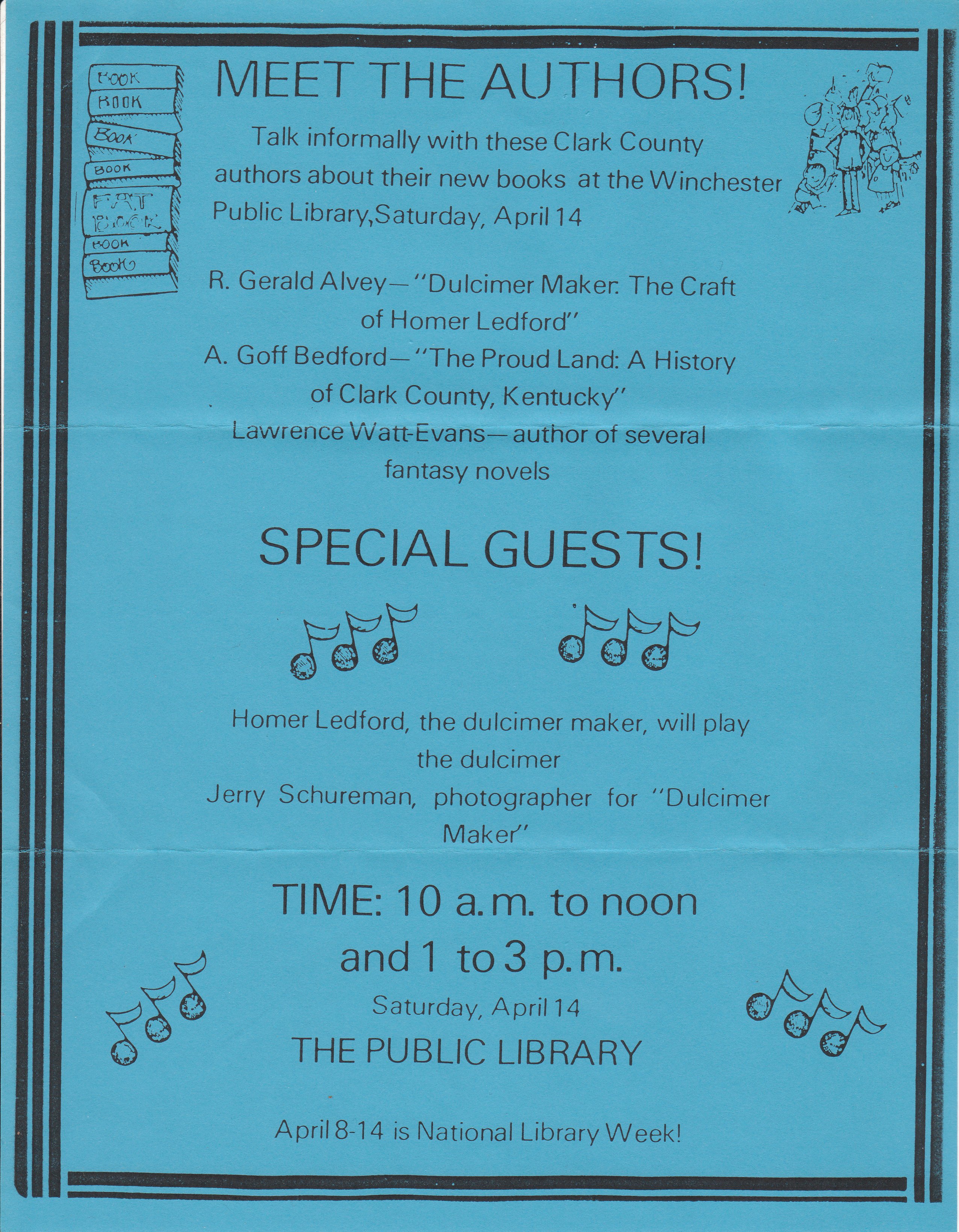
I sold my first novel, The Overman and the Basilisk, to Lester del Rey at Del Rey Books in May of 1979. He retitled it The Lure of the Basilisk, and retitled me Lawrence Watt-Evans. I didn’t actually meet Lester until 1982.

I didn’t meet my first self-proclaimed, non-gafiated SF fan until March, 1980, when the recently-formed Blue Grass Science Fiction Association (BGSFA, pronounced Bugs-Fah; later renamed LexFA, the
Lexington Fantasy Association) saw a “local boy makes good” piece about me in the Lexington Herald-Leader and invited me to a meeting.

The first published fiction writer I ever met was Harry Stubbs, a.k.a. Hal Clement. I think I was eight. He came to the house to talk to my father about NEACT business. NEACT was the New England Association of Chemistry Teachers; Harry and my dad were both active members.

So was Isaac Asimov, and that connection allowed my parents to contact him to talk at our church when I was a teenager. At the time I was actively avoiding all church activities — at the age of eight I had rebelled against the staggeringly boring sermons of Rev. Holmes and refused to attend any services. (I wasn’t the only one; the parish committee fired Holmes not long after, replacing him with David Weissbard.) Even Asimov wasn’t enough to lure me back to church, but I did wander over to the Common afterwards and got a look at him as he was preparing to leave. I’ll count that as the second.

The third published fiction writer I ever met was me. If you don’t want to count that, then it was Stephen Leigh, at Rivercon V, my first convention, in July 1980, five months after my first novel was published. Phyllis Ann Karr was next, then Roger Zelazny, and after that I lose track; that convention had a pretty good guest list.

So much for writers nurturing the next generation in my case.

As for help from editors, the first editor I ever met was probably Carol Amick, who worked for the town weekly, the Bedford Minuteman, and went on to become its editor. We never spoke; when I say “met,” I mean she was pointed out to me when we were in the same room.

The second was a man whose name I’ve forgotten, the editor of the Bedford Patriot, the short-lived right-wing rival to the Minuteman. When I was seventeen I decided that their writing was so bad they
might even consider hiring a high-school kid; I was right, and they bought three or four feature articles from me.

My first contact with a fiction editor was a rejection slip from Ed Ferman at F&SF in 1972. It was the standard form letter, no note. I went on to collect an assortment of rejections — seventy-one before I sold anything — from a variety of editors. All of those rejections were form letters except for a handful from Moshe Feder, who was then an editorial assistant to Ted White at Fantastic and Amazing, and a couple from Hank Davis, who was Ed Ferman’s assistant at F&SF. Those came along in 1974 and 1975; Hank was sending them because Moshe had urged him to. They were short typed notes, never more than two paragraphs, explaining why my stories were being rejected and offering encouragement to try again. In one case it was because the story was deemed too much like Leiber’s Fafhrd and the Grey Mouser; at that time I had never heard of Fafhrd and the Mouser, so that one turned out to be very useful, because I went out and found the relevant books and read them. I love those stories, but I don’t really see the resemblance other than it being sword & sorcery about a pair of adventurers.

I sold a short-short to The American Atheist in August, 1975. The entirety of my contact with them after submission was a note in May of 1975 telling me they were buying it, and a packet in August containing my contributor’s copy and my check.

The third editor to ever send me something other than a form rejection or a form acceptance and a check was Lester del Rey, when he bought my first novel with a three-page, single-spaced revision letter.

So much for detailed editorial feedback being necessary to a writer’s development, or editors only buying from people they know.

Another standard way to break in is supposed to be through writing workshops. I first heard of writing workshops in 1980, after my first novel was published. I signed up for one anyway, thinking it might be educational, and was severely disappointed — I had more professional publishing credentials than anyone else there, including the instructor. The only ones I’ve attended since then, it was as an instructor.

As far as other formal training goes, I have never taken any sort of course in creative writing, or fiction writing, or whatever. The only English courses I ever took were required ones.

Family support? My parents actively tried to discourage me from writing from 1962 until 1971. Late in 1971 my father seems to have decided that if I hadn’t given up yet, maybe I could pick up a little extra money writing articles; it was his idea to try the local papers. That was the full extent of his support. When The Lure of the Basilisk was published, a couple of months before he died, he read it and informed me that it wasn’t really very good. My mother liked it better.

I never heard what two of my sisters thought of it. Jody considered it too bloody, and stopped reading my work midway through my second novel, The Seven Altars of Dûsarra (originally The City of Seven Temples; Lester changed it), when my hero lopped off an enemy’s head. She never read anything else I wrote after that, up until she died in 1986.

My sister Ruth said that for the first couple of chapters she kept thinking, “I could have written this. This sounds just like any Evans.” Then somewhere around Chapter Three it took off, and since then she’s been a fan.

I don’t believe my brother’s ever read any of my work. If he has, he’s never mentioned it.

My wife Julie was supportive of my writing up to a point; she thought it was a cool thing to do, she did read and enjoy it, and she had no idea how difficult it was to succeed as a writer. However, she also made it clear that she didn’t intend to support me forever if it didn’t work out, and in fact by March of 1979 she was clearly fed up. I quit writing and started a mail-order collectibles business. When Lester bought the novel, though, I went back to writing with Julie’s blessing.

Right up until that first novel was published, my in-laws kept asking when I was going to get a real job.

So much for writing education or an enthusiastically supportive family being necessary.

Oh, yes — agents, another supposed necessity. I knew nothing about agents when I sold my first novel. When Judy-Lynn del Rey rejected The Chromosomal Code three years and four novels later, saying it was publishable but not right for Del Rey, that was the first time I gave any thought to getting an agent. I asked Lester for advice, since he was a writer himself and had dealt with scads of agents.

He didn’t offer any advice; instead I got a letter from a guy named Russell Galen who told me that he was Lester’s agent, Lester had suggested he contact me, and that he’d like to see a sample of my work because he might be interested in representing me.

He was interested, and sold The Chromosomal Code to Avon.

Russ has been my agent ever since, pretty much. (There was a brief interruption when he left Scott Meredith and I didn’t immediately follow.)

This is why I don’t have much useful advice for people looking for agents; my experience really doesn’t serve as a model for anyone else.

To sum up: My experience doesn’t fit any of the standard advice. I had no contacts, no training, no support; I just wrote, and sent what I wrote to editors. That worked well enough to sell my first articles when I was seventeen, my first story when I was twenty-one, and my first novel when I was twenty-four.

I didn’t talk about writing. I didn’t read about writing. I didn’t workshop my writing. I didn’t know any writers, editors, or agents.

I just wrote.

That worked for me.

And I didn’t receive any help that I felt I should repay.

If I sometimes seem impatient with needy beginners, well, that’s why.

On the other hand, I do try to help out promising beginners. I have advice pages on the web; I’ve read stories for friends (and if you have to ask, you aren’t a good enough friend); I’ve taught workshops without pay. (I’ve also taught and critiqued for money, though that’s not relevant here.)

But I’m not paying anything forward. And you don’t need help.